Call Us For a Free Quote or More Info: (404) 474-8110

The Three Pillars of Profit for eCommerce Part 1

The Three Pillars of eCommerce

The Three Pillars are life-changing to your eCommerce store if you understand and implement them properly. They really can be the difference between success and failure in eCommerce.

I spent a lot of time and a ton of money to figure out The Three Pillars. He spent hundreds of thousands of dollars on agencies, courses, masterminds, and experts only to discover nobody had ALL the answers – until now!

 Aside from your offer/products, The Three Pillars ARE your success. Few people understand all Three Pillars or how they complement each other – and what happens when you have all three working correctly.

You may find people that are good with one or two Pillars, but most eCommerce stores don’t have all Three Pillars working in unison. We’ve seen a lot of stores and have yet to find one that had all three set up correctly before working with me.

That’s a powerful statement because, with the information in my book The Perfect Shopify Store, you can learn how to make your store perform better than everyone you’re competing against.

If you understand all Three Pillars, implement all three, and continually improve all three, it gives you an advantage in the marketplace. Especially over your competitors because very few people – brand owners, eCommerce marketers, or agencies – understand these three things and know how they complement each other.

The Three Pillars of Profit, when done correctly, will generate 70 to 80% of your total store revenue. Let that sink in a minute because that’s a huge number.

Most people think there is some secret to whether they have success or not. Some will say that all they need is a great quality traffic source or a great Facebook ads person. Some think that their competitors succeed because they have better influencers.

People also think that just because they have the best widget or supplement on the market, their products will automatically sell when the store is open. Nothing can be farther than the truth.

People STILL must know what your product is, why they need it, and where to buy it. The REAL SECRET is that you’re almost destined to succeed if you master The Three Pillars.

There are no guarantees. You MUST have a great offer and product. Then you implement The Three Pillars. If done correctly, it always works. It works across multiple store platforms and different markets.

Yet, if they’re done incorrectly, you could struggle or even fail. You’ll see from some numbers and stats we’ll share these Three Pillars can make or break your business. We’re not into marketing hype. No Lamborghinis and all that – none of that’s appealing to us.

We all hear about these “secrets” that no one shares. In this case it is TRUE. There is a secret. The secret is called “The Three Pillars of Profit!”

So what are these Three Pillars?
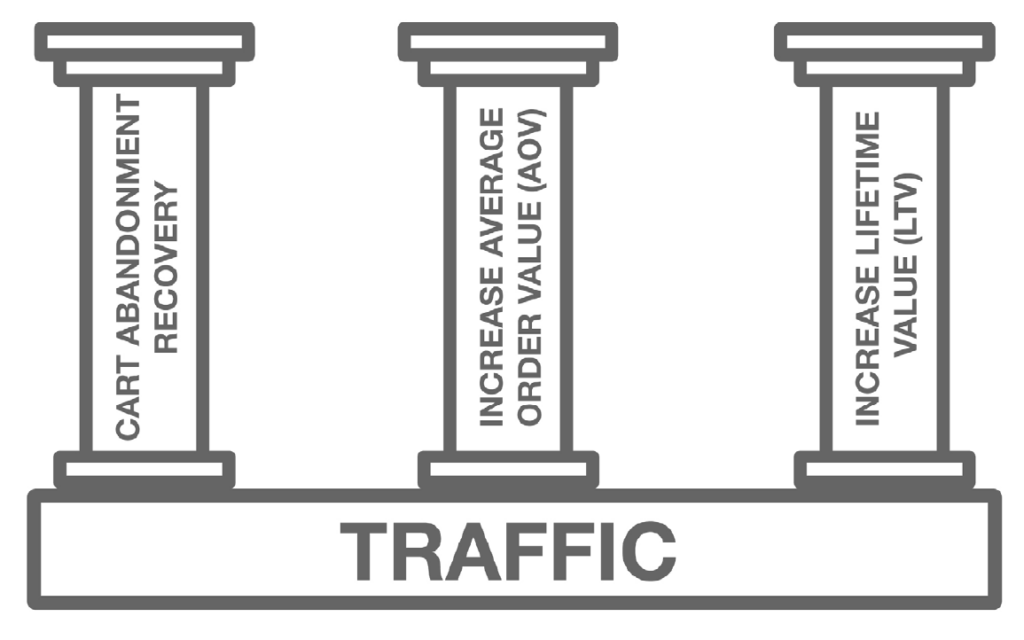
1. Cart Abandonment Recovery

You’re probably well aware of abandoned carts if you own an eCommerce store. People go to your store, put products in their cart, and then they leave without making a purchase – and they never come back.

People do this on ALL eCommerce stores. We’ll share how much of an impact this can have on your business. Abandoned cart recovery can double your revenue and increase profit even more, especially if you’re not doing it now or not doing it correctly.

2. Average Order Value (AOV)

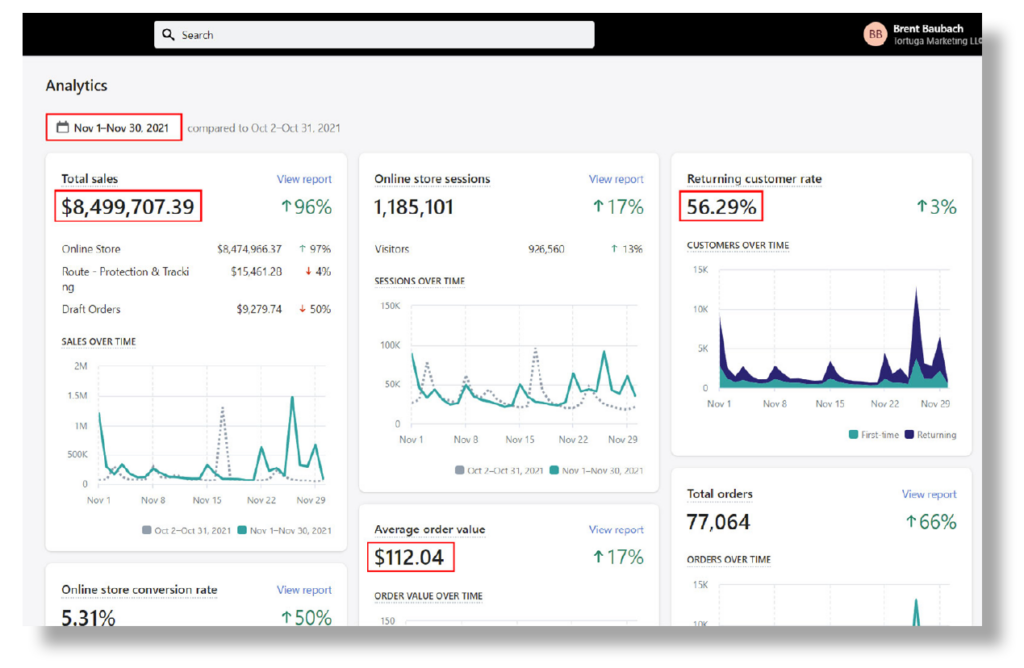
Average Order Value or AOV is the amount of your average sale. Divide your total revenue by the number of sales transactions over a measured period, typically monthly, quarterly, or annually. Example: $1,000 in monthly revenue divided by 100 sales equals $10 AOV.

AOV is the life blood of all eCommerce stores. Increasing the average value of each order could be the most important thing you can focus on. We love focusing on AOV because if we can get AOV up, it changes our ability to acquire customers.

3. Customer Lifetime Value (LTV)

What’s the value of a customer in total sales over their lifetime? That’s what LTV is. If you can keep customers longer and sell to them on multiple occasions, you can radically improve your total sales.

Example: A customer buys from you three times over one year, spending $50 each time for a total of $150. This customer’s LTV to you is $150. On Shopify, you can look at “Returning customer rate” under Analytics – Dashboard.

This gives you a percentage of repeat buyers, not a dollar value of LTV. Both are valuable to know.

These Three Pillars are the foundation to build a great eCommerce store on. Individually they’re good, but when combined and optimized, they are unstoppable.

I have seen stores on the brink of closing before they started using The Three Pillars. They turned their entire business around after focusing more on these three things.

In the next few posts, I will show you some phenomenal real-world results…

I will show you examples of how my team implemented The Three Pillars on stores and how it’s changed the businesses. How businesses have been able to scale, how they’ve been able to make money, and how they’ve become highly profitable.

Be on the lookout for the next part in this series.

Brent Baubach

CMO and Co-Founder – PURE Private Label LLC

CEO and Co-Founder – Ecom Institute LLC

For more information on creating your own supplement brand go to www.PUREPrivateLabel.com For more information about creating a successful Shopify store go to www.ecominstitute.com

Keep Reading…You Will Also Like:
The 3 Pillars part 2- Cart Abandonment Recovery
The Only Facebook ad tutorial you need?

Why Is Creating Customer Value So Important To Supplement Brands?

Building a successful supplement brand is challenging, as a supplement brand owner, it is important that you provide value to your customers to set you apart from your competitors.

Providing value means offering useful products and services that encourage sales, improve customer loyalty, and grow your brand’s reputation. Here are a few ways to provide value to your customers:

  1. Offer high-quality products: Providing high-quality products that meet the needs of your customers is essential for providing value. This means using high-quality ingredients, ensuring that your products are safe and effective, and providing clear instructions for use.
  2. Provide excellent customer service: Providing excellent customer service is another way to provide value to your customers. This means being responsive to customer inquiries, addressing customer concerns promptly, and going above and beyond to ensure customer satisfaction.
  3. Create a customer loyalty program: A customer loyalty program is a great way to encourage and reward loyal customers. These programs typically have criteria for rewards, but the benefits for the customer usually outweigh these conditions. This can include discounts, free products, and exclusive access to new products.
  4. Encourage customer feedback: Encouraging customer feedback is a great way to show your customers that you value their opinions and insights. This can include sending out surveys, requesting email reviews, and being open to the feedback you receive. Customers are more willing to invest in businesses that value their opinions and insights.
  5. Use social media influencers: Influencer marketing can directly boost product sales, but it can also support other marketing goals like brand awareness or acquiring new followers. When you use influencers to help market your product, you get instant access to an audience that has already established trust with the source of information. This can help increase the success of your supplement brand.

In conclusion, providing value to your customers is essential for the success of your supplement brand.

By offering high-quality products, providing excellent customer service, creating a customer loyalty program, encouraging customer feedback, and using social media influencers, you can provide value to your customers and build a loyal customer base.

Keep Reading…You Will Also Like:
Stop Wasting Time and Money on the wrong audience: Create a customer avatar now, Heres how….
Effects of creatine Supplementation on memory in health individuals: a systematic review and meta-analysis of randomized controlled trials
Collagen, an attractive option to consider for your brand

Stop Wasting Time and Money on the Wrong Audience: Create a Customer Avatar Now, Here’s How…

Targeting a specific audience rather than a broad audience is crucial for the success of your advertising and marketing campaigns.

Here are some reasons why:

  1. Better ROI: By targeting a specific audience, you can create more relevant and personalized ads that are more likely to convert. This means you can get a better return on investment (ROI) for your advertising spend.
  2. More efficient use of resources: Targeting a specific audience allows you to focus your resources on the people who are most likely to be interested in your products or services. This means you can avoid wasting time and money on people who are not your target audience.
  3. Better engagement: By creating ads that resonate with your target audience, you can increase engagement and build stronger relationships with your customers. This can lead to increased loyalty and repeat business.
  4. Improved brand image: By targeting a specific audience, you can create a more focused and consistent brand image that resonates with your target audience. This can help you stand out from the competition and build a stronger brand identity.

Creating a customer avatar is an essential step in defining your target audience.

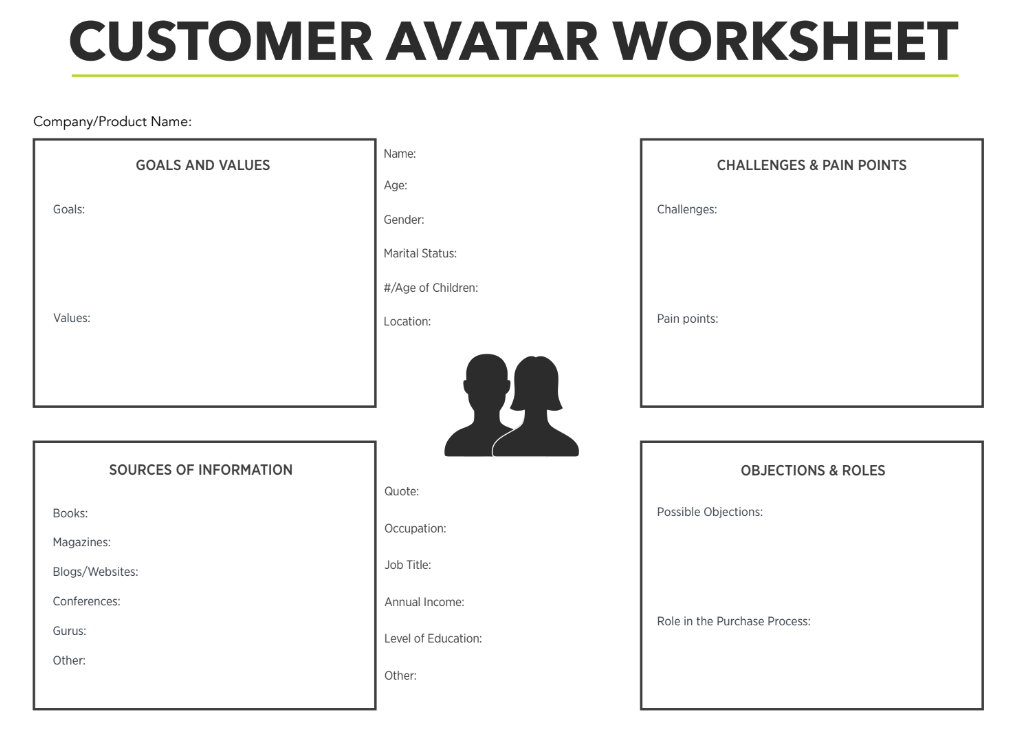
A customer avatar is a detailed profile of your ideal customer that helps you understand their needs, preferences, and behaviors. By creating a customer avatar, you can better understand your target audience and create marketing campaigns that resonate with them. Here’s how to create a customer avatar for your brand and use it to create great advertising and marketing campaigns to use on social media with paid ads and influencers.

Step 1: Identify Your Ideal Customer

The first step in creating a customer avatar is to identify your ideal customer. This includes their demographics, such as age, gender, location, income, education level, and occupation. It also includes their interests, behaviors, pain points, and challenges.

Step 2: Gather Information

Once you have identified your ideal customer, gather as much information as possible about them. This includes conducting surveys or phone interviews to capture feedback from your existing customer base. You can also use tools like Ask Your Target Market to survey a larger audience base.

Step 3: Create the Avatar

Use the information you have gathered to create a persona that represents your ideal customer. Give them a name, a photo, and a backstory to make them feel more real. Be as specific as possible—the more details you have, the more you and your perfect customer will connect.

Step 4: Refine the Avatar

Continuously refine the persona as you gather more information about your target audience. Use feedback from customers and data analytics to improve the accuracy of the persona.

Step 5: Use the Avatar for Advertising and Marketing Campaigns

Once you have created the customer avatar, use it to create advertising and marketing campaigns that resonate with your target audience. Use language and images that speak to their goals, values, and pain points. Use social media advertising tools to target your ads based on demographics, interests, behaviors, and location. This will help you reach the right people with your ads.

Step 6: Work with Influencers

Influencer marketing is an effective way to reach your target audience on social media. Use your customer avatar to identify influencers who have a similar audience profile. Work with them to create content that resonates with your target audience. By creating a customer avatar for your brand and using it to create great advertising and marketing campaigns to use on social media with paid ads and influencers, you can attract more customers, increase sales, and grow your business.

In conclusion, creating a customer avatar is an essential step in targeting a specific audience for your advertising and marketing campaigns. By understanding your ideal customer, you can create more relevant and personalized ads that resonate with your target audience, leading to better ROI, more efficient use of resources, better engagement, and an improved brand image.

CLICK HERE TO DOWNLOAD THE CUSTOMER AVATAR TEMPLATE

Keep Reading…You Will Also Like:
Why is creating customer value so important to supplement brands
How do I know If I have the right formula for my supplement brands products?

Exploring E-commerce Trends and Top Selling Products for Supplement Brands

Introduction

The e-commerce landscape has witnessed remarkable growth in recent years, with consumers increasingly turning to online platforms for their shopping needs. This trend holds true for the dietary supplement industry as well, as more and more consumers seek convenient ways to access the products that support their health and wellness goals. In this blog post, we’ll delve into the top e-commerce trends that dietary supplement brands should consider in order to stay ahead of the curve and maximize their online presence. Additionally, we’ll explore some of the top-selling supplement products, including collagen, fat burners, pre-workouts, as well as health and wellness supplements.

Personalized Product Recommendations

In the vast world of dietary supplements, customers often feel overwhelmed by the sheer variety of options available. To address this, dietary supplement brands can leverage the power of personalized product recommendations. By utilizing customer data brands can create products tailored to individual needs and preferences. This not only enhances the customer experience but also increases the chances of repeat purchases and customer loyalty.

Influencer Marketing and User-Generated Content

Influencer marketing continues to be a potent strategy for dietary supplement brands. Collaborating with relevant influencers in the health and wellness space can help brands reach their target audience effectively. By sharing authentic experiences, testimonials, and reviews, influencers can create a sense of trust and credibility among their followers. User-generated content, such as customer reviews and testimonials, also plays a crucial role in building brand reputation and encouraging potential customers to make a purchase.

Subscription Models and Auto-Replenishment

The subscription model has gained immense popularity across various industries, and the dietary supplement market is no exception. Offering subscription-based services allows brands to establish a steady revenue stream and maintain a loyal customer base. By providing automated and convenient replenishment options, brands can ensure that customers never run out of their favorite supplements. This trend not only improves customer retention but also enhances the overall customer experience by minimizing the hassle of reordering products.

Mobile Optimization and Enhanced User Experience

With the increasing use of smartphones and tablets, it’s imperative for dietary supplement brands to optimize their e-commerce platforms for mobile devices. A responsive and user-friendly mobile version is vital to capturing the attention of mobile users, who constitute a significant portion of e-commerce traffic. Streamlined navigation, fast loading times, and intuitive design are key factors that contribute to an enhanced user experience, ultimately leading to higher conversion rates.

Enhanced Transparency and Trust

Consumers are becoming increasingly conscious about the products they consume and the brands they support. In the dietary supplement industry, it is essential for brands to prioritize transparency and provide clear information about their products. This includes displaying ingredients, sourcing information, certifications, and independent third-party testing results. By fostering trust through transparent practices, dietary supplement brands can differentiate themselves from the competition and establish long-term customer relationships.

Now let’s explore some of the top-selling supplement products within the dietary supplement industry:

Collagen Supplements

Collagen has gained significant popularity in the health and beauty industry. Collagen is a protein that plays a vital role in maintaining the health and elasticity of our skin, hair, nails, and joints. Collagen supplements are commonly taken to promote youthful skin, improve joint health, and support overall well-being. With its growing demand, collagen supplements have become one of the top-selling products in the dietary supplement industry. Brands can leverage this trend by offering a variety of collagen formulations, such as collagen peptides, marine collagen, and multi-collagen blends, catering to different customer preferences.

Fat Burners and Weight Management Supplements

Weight management is a major concern for many individuals, and as a result, fat burners and weight management supplements have become highly sought after products. These supplements typically contain ingredients that help boost metabolism, suppress appetite, and support fat oxidation. Brands can capitalize on the popularity of fat burners by developing scientifically formulated supplements that provide safe and effective weight management solutions. Marketing strategies that emphasize the natural ingredients, clinical studies, and positive customer reviews can help build trust and encourage purchase decisions.

Pre-Workout Supplements

Fitness enthusiasts and athletes often turn to pre-workout supplements to enhance their exercise performance and maximize their training sessions. Pre-workout supplements commonly contain ingredients like caffeine, beta-alanine, creatine, and B vitamins, which are known to increase energy, focus, and endurance. With the rising interest in fitness and exercise, pre-workout supplements have experienced a surge in demand. Dietary supplement brands can target this market by offering pre-workout products with unique formulations, appealing flavors, and scientifically-backed ingredients to cater to various fitness goals.

Health and Wellness Supplements

Health and wellness supplements encompass a broad range of products designed to support overall well-being. These include multivitamins, immune boosters, stress relief supplements, and sleep aids, among others. As consumers prioritize their health, the demand for health and wellness supplements continues to rise. Brands can capitalize on this trend by offering high-quality supplements that target specific health concerns or provide comprehensive support for overall wellness. Emphasizing the quality of ingredients, clinical research, and certifications can help brands establish trust and position themselves as reliable sources of health-enhancing supplements.

Conclusion

As the e-commerce landscape continues to evolve, dietary supplement brands must adapt to the latest trends while also understanding the demand for specific product categories. Personalized product recommendations, influencer marketing, subscription models, mobile optimization, and transparency are key e-commerce trends that can enhance brand presence and customer experience.

In addition, collagen supplements, fat burners, pre-workout supplements, along with health and wellness supplements are among the top-selling products in the dietary supplement industry. By leveraging these trends and offering high-quality products that address consumer needs, dietary supplement brands can optimize their online presence, attract a loyal customer base, and drive sales. Staying informed about the e-commerce landscape and aligning product offerings with consumer preferences will be key to success in the dynamic dietary supplement market.

Keep Reading…You Will Also Like:
The Only Facebook ad tutorial you need?

How many Flavors should I start my supplements Brands with?

Collagen, An Attractive Option To Consider For Your Brand.

Collagen supplements have been growing in popularity in recent years, and for good reason. Collagen is a protein that plays a vital role in the health and strength of our skin, hair, nails, bones, and joints. As we age, our body’s natural production of collagen decreases, which can lead to wrinkles, sagging skin, brittle nails, and joint pain. This is where collagen supplements come in, as they can help replenish and support the body’s natural collagen production.

Collagen supplements come in various forms, including powders and capsules. They are typically made from animal sources, such as bovine or marine collagen, and can also include other beneficial ingredients like vitamin C and hyaluronic acid. These supplements are easy to incorporate into your daily routine, as they can be added to your morning coffee or smoothie or taken as a capsule.

The benefits of collagen supplements are numerous and varied. One of the most noticeable benefits is improved skin health. Collagen is a major component of the skin’s structure, and taking collagen supplements can help increase skin elasticity and hydration, reduce the appearance of fine lines and wrinkles, and improve skin texture and firmness.

Collagen supplements can also benefit hair and nail health. Collagen helps strengthen the hair and nails, reducing breakage and promoting growth. Additionally, collagen can improve joint health, as it is a major component of cartilage, the tissue that cushions joints and allows them to move smoothly. Taking collagen supplements can help reduce joint pain and stiffness, making it easier to stay active and maintain a healthy lifestyle.

The popularity of collagen supplements has grown significantly in recent years, thanks in part to social media influencers and celebrities touting their benefits. However, it’s important to note that not all collagen supplements are created equal. It’s important to do your research and choose a high-quality supplement manufacturer to create a great product for your.

Private label collagen supplements can offer a variety of benefits for supplement brands, making it an attractive option to consider. By offering a private label collagen product, supplement brands can tap into this growing market and potentially increase their customer base.

One of the key benefits of private labeling a collagen product is the ability to customize the product to fit the brand’s unique identity. The brand can choose to add their logo, branding, and packaging, creating a product that is uniquely theirs. This can help increase brand recognition and loyalty, as customers may be more likely to trust and purchase products from a brand they already know and love.

Another benefit of private labeling collagen supplements is the potential for increased profit margins for the brand. Private labeling collagen supplements can also help brands stay ahead of the competition by offering a unique product that stands out from similar offerings on the market. This can be especially beneficial in a crowded marketplace, where it can be challenging for brands to differentiate themselves and gain a competitive edge.

In conclusion, collagen supplements offer a range of benefits for overall health and wellness, and their popularity is only continuing to grow. A private label collagen supplement can offer even more benefits for supplement brands, such as customizability, increased profit margins, and competitive differentiation. As with any supplement product, it’s important to ensure the highest quality ingredients and formulations, and to comply with all necessary regulations and safety standards.

Contact [email protected] to find out more about a custom formulated collagen product for your brand.

Keep Reading…You Will Also Like:
Eating more magnesium each day keeps dementia at bay
Effects of creatine Supplementation on memory in health individuals: a systematic review and meta-analysis of randomized controlled trials
How do I know If I have the right formula for my supplement brands products?

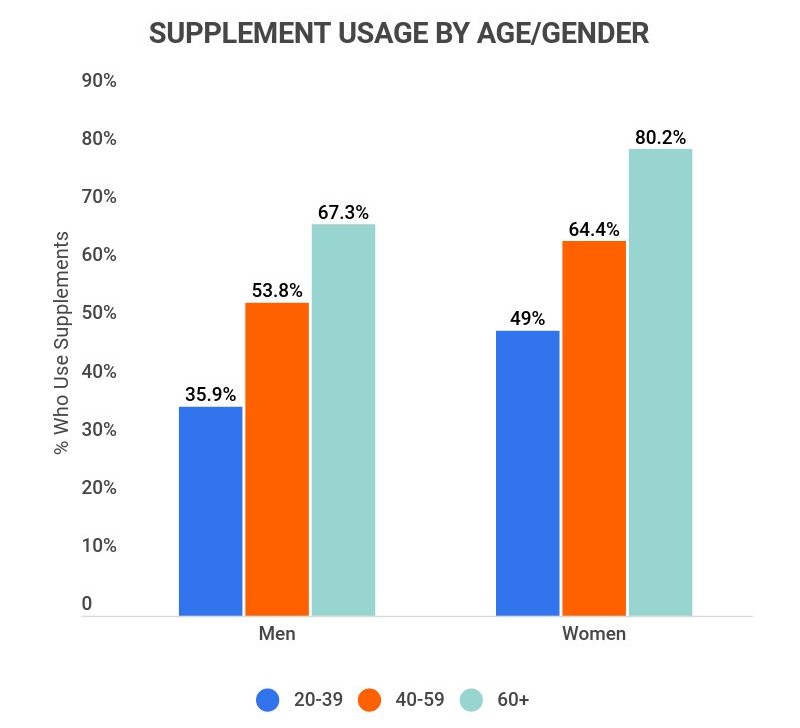
75% of Americans Use Dietary Supplements, Usage Back to Pre-Pandemic Levels

The Council for Responsible Nutrition (CRN) reports that supplement usage is back to pre-pandemic levels. 75% of Americans report using nutritional or dietary supplements. The vast majority of supplement users continue to be regular users.

“This year’s data shows a remarkable picture of continuity and paints the landscape of a vibrant, mainstream industry,” said Brian Wommack, CRN’s senior vice president of communications. “While overall usage is down slightly from its pandemic peak, reported usage of immunity-boosting supplements—including vitamin D, vitamin C, and zinc—is steady from last year.”

New this year is an increase in specialty supplement usage. More than half of consumers (52%) who take supplements report taking a specialty supplement, the most reported of which are omega-3s, probiotics, melatonin, and fiber.

Still the king among supplement users, 70% report taking a multivitamin in the past 12 months. Sports nutrition supplements have seen a significant increase in use since last year, up five points to 39%.

Trust in the dietary supplement industry also remains high. More than three-quarters of Americans (77%) find the industry trustworthy. That number is even higher among supplement users, at 84%.

When asked their top motivator for taking dietary supplements, Americans’ top responses are “maintaining my health” and “live healthier/adopt healthier habits.” “This answer is not surprising,” said Wommack. “Data consistently shows supplement users are much more likely to report engaging in healthy behaviors like exercising, eating a balanced diet, visiting their doctor regularly, and regularly getting a good night’s sleep.”

Full Article Here

Keep Reading…You Will Also Like:
How do I know If I have the right formula for my supplement brands products?
How many Flavors should I start my supplements Brands with?

Eating more magnesium each day keeps dementia at bay

Originally post – https://www.anu.edu.au/news/all-news/eating-more-magnesium-each-day-keeps-dementia-at-bay

More magnesium in our daily diet leads to better brain health as we age, according to scientists from the Neuroimaging and Brain Lab at The Australian National University (ANU).  

The researchers say an increased intake of magnesium-rich foods such as spinach and nuts could also help reduce the risk of dementia, which is the second leading cause of death in Australia and the seventh biggest killer globally.  

The study of more than 6,000 cognitively healthy participants in the United Kingdom aged 40 to 73 found people who consume more than 550 milligrams of magnesium each day have a brain age that is approximately one year younger by the time they reach 55 compared with someone with a normal magnesium intake of about 350 milligrams a day.   

“Our study shows a 41 per cent increase in magnesium intake could lead to less age-related brain shrinkage, which is associated with better cognitive function and lower risk or delayed onset of dementia in later life,” lead author and PhD researcher Khawlah Alateeq, from the ANU National Centre for Epidemiology and Population Health, said.  

“This research highlights the potential benefits of a diet high in magnesium and the role it plays in promoting good brain health.” 

It’s believed the number of people worldwide who will be diagnosed with dementia is expected to more than double from 57.4 million in 2019 to 152.8 million in 2050, placing a greater strain on health and social services and the global economy.  

“Since there is no cure for dementia and the development of pharmacological treatments have been unsuccessful for the past 30 years, it’s been suggested that greater attention should be directed towards prevention,” study co-author Dr Erin Walsh, who is also from ANU, said. 

“Our research could inform the development of public health interventions aimed at promoting healthy brain ageing through dietary strategies.” 

The researchers say a higher intake of magnesium in our diets from a younger age may safeguard against neurodegenerative diseases and cognitive decline by the time we reach our 40s.  

“The study shows higher dietary magnesium intake may contribute to neuroprotection earlier in the ageing process and preventative effects may begin in our 40s or even earlier,” Ms Alateeq said. 

“This means people of all ages should be paying closer attention to their magnesium intake. 

“We also found the neuroprotective effects of more dietary magnesium appears to benefit women more than men and more so in post-menopausal than pre-menopausal women, although this may be due to the anti-inflammatory effect of magnesium.” 

Participants completed an online questionnaire five times over a period of 16 months. The responses provided were used to calculate the daily magnesium intake of participants and were based on 200 different foods with varying portion sizes. The ANU team focused on magnesium-rich foods such as leafy green vegetables, legumes, nuts, seeds and wholegrains to provide an average estimation of magnesium intake from the participants’ diets. 

The research is published in the European Journal of Nutrition

Keep Reading…You Will Also Like:
How do I know If I have the right formula for my supplement brands products?
Effects of creatine Supplementation on memory in health individuals: a systematic review and meta-analysis of randomized controlled trials

How Many Flavors Should I Start My Supplement Brand With?

Do you have to have more than one flavor to be successful?

What if people don’t like your flavors?

What if one flavor sells better than the others?

We get these questions all the time.

The good news is, we’ve worked with 100’s of brands and have evidence of success to help you decide.

While the correct answer for your brand is always going to be specific to the particular needs of your brand, we do have some rules of thumb that we can use as a framework.

The biggest consideration for making this decision is how much cash (or credit) you have available to invest in products.  

Once you have an idea of how much it costs for a production run of your product, you can use the rules below to make the best decision for your brand.

We are always here to speak with you about your particular situation also, but this will help you begin to understand how to evaluate the question.  

The short answer is: If money isn’t an obstacle for launch, start with 2-3 flavors 

After that, quickly add new flavors over the next few months to give you something “hot” to continuously talk about with your customers.

Pro’s to having more than one flavor include:

  • You gain the ability to create “stacks or bundles” (increase avg order size)
  • You can add upsell features to your site (again, increasing avg order size)
  • Customers will have a greater likelihood of seeing a flavor they’d like to try
  • Returning customers who like variety can try something new

I know many of you are probably saying “It must be nice for money to not be an obstacle.” 

You’re absolutely right that the majority of startups need to think a little more carefully about how they make this choice.

So the next most important question is “How do you know if you have enough money to run more than one flavor?”

Having more than one flavor (or SKU in general) creates a some new dynamics for your brand that you need to consider:

  • More inventory management/forecasting
  • How much cash to keep in reserve for reorders
  • Tracking timelines for deliveries

While I am always going to feel like the pros of having more flavors outweigh the cons, here is the rule you should consider for having more than one flavor.

You should consider running more than one flavor if you have enough cash (or credit) to pay for at least 1 deposit after receiving your product.

For example, if you want to run with 3 flavors and you have enough cash to produce all three flavors plus pay the 50% deposit on one of those flavors, you are in a better position to bring all of those to market.

The reasoning behind that is you will have flavors that perform better than others (and that’s a good thing!).

If you’re selling your best flavor quickly and you need to put in a reorder before the other flavors have picked up speed, you want to have the cash on hand to place that deposit.  

Don’t sell out of your biggest mover because you didn’t plan ahead.

The “pace” at which your flavors sell is going to vary (and there will always be favorites).

It is not a bad sign that some flavors don’t sell as fast as others.  

As long as the flavor sells, you have a winner. Even if it’s slower than the others.

Having the reserve of at least one production deposit will give you the flexibility to at least keep your fastest mover live on your site.

As a start up, it’s nearly impossible to project your selling speed or have any real idea of a forecast.

But having a reserve will let you fill in the gaps and act quickly to at least keep your biggest moving rolling.

Hopefully these frameworks have helped you begin to think about your budget and cash flow in a new way.

If you’re still wondering what the right choice is, talk to us about your current situation, and we can build a plan for you that makes the most sense.

To your Success,

Rush Ricketson

CEO, Pure Private Label

Keep Reading…You Will Also Like:
How do I know If I have the right formula for my supplement brands products?
How to pick a supplement manufacturer: The ultimate guide

How Do I Know If I Have The Right Formula For My Supplement Brands Products?

We know from working with 100’s of brands that creating the “perfect” formula can feel like an overwhelming task.

How can you be sure that your product is going to be competitive in your market?

How do you know if you’ll get good reviews?

Can you be sure that your product is going to perform as expected?

I know that it can feel like getting the exact dosage of every single ingredient perfect in your formula will make or break your brand.

While you do need to have a formula that performs as expected for your market, the good news is, it doesn’t have to be a grueling process.

I was working with a brand owner who was getting started with a preworkout for 18-24 year old bodybuilders…

He had a lot of concerns about his product’s formula because that market can be particularly critical of ingredients and dosages.

We went through a process of creating his formula that checked all the boxes.

  • We evaluated top performing products in the space.
  • We reviewed literature regarding effective ingredients and doses
  • We paired effectiveness with market viability (is it still practical for a consumer and profitable for the brand).

But he was still concerned and unsure about his formula…

The bottom line is that there is no way to be 100% sure before bringing your product to market.

While that may not be comforting to hear at first, hang in there with me, and it will all make sense.

So how do we know if the formula is perfect?

Before going into that, let’s first talk about what most of the biggest brands in the market do…

Some of the biggest brands in the market have changed their formula 10+ times over the years.

What if I told you that a HUGE brand has changed its formula 52 times since launching? (one that you’ve likely heard of)

So how are the biggest brands in the market not “getting it right” the first time.

The answer is the market moves and you will likely change your formula at some point.

  • Research reveals new answers about ingredients and doses
  • New ingredients become more widely available
  • Market spending behavior shifts
  • Market desires change

The big brands know that the most important point of the business is getting to know your customers.

“So you’re telling me I’ll have to change my formula – but where do we start?”

When you’re deciding where to start, as long as you’ve evaluated the points outlined above, the goal should be to create a formula that is good enough to earn reorders.

If you’ve done that, you’ve given your brand the chance to launch and grow.

An important consideration behind this point is that you don’t know who exactly your market is yet until you start selling!

No matter how much research you do, your market will always surprise you a little bit.

You’ll likely be surprised about who exactly they are, what they want, what they expect, etc.

This is the key that the big brands know, which is why they are okay with launching a product knowing it will change later.

Only once you have a product on the market do you get a chance to get to know them better and deliver a product to them and create a community for them.

Going back to the story above about the brand owner with the preworkout product…

Once we had this conversation, he felt confident that we had done all that we can “pre-market.”

He learned that the rest of the work starts once you actually have a product on the market, and that is when you get the opportunity to shift and connect with your community.

While this particular brand owner hasn’t changed his original formula yet, he did launch a second product that is a slight variation of the first one to cater to the specific requests of his community.

The second SKU wasn’t even on his radar before putting the first one on the market.

He now has 2 SKUs with multiple flavors each that are all selling well.

I’ve seen this scenario play out many times where the next products launched based on customer feedback actually become the best sellers for the whole brand!

Don’t tie yourself in knots trying to be perfect for your launch!

Make a product that you believe is good enough for your market and get in the game!

The longer you stay on the sidelines just “thinking” about your product, the more time that goes by that could be spent connecting with your customers.

Your customers ARE your brand – not your products.

Get started now and get to know them!

We’re always here to help you adapt to customer feedback and make the appropriate changes or pivots for your brand.

To your success,

Rush Ricketson

CEO, Pure Private Label

Keep Reading…You Will Also Like:
How to pick a supplement manufacturer: The ultimate guide
Collagen, an attractive option to consider for your brand
Effects of creatine Supplementation on memory in health individuals: a systematic review and meta-analysis of randomized controlled trials
Eating more magnesium each day keeps dementia at bay

The ONLY Facebook Ads Tutorial You Need?

Every brand owner has either attempted to run or is curious about running Facebook Ads.

Although this is NOT supplement specific, meaning he does not talk about health claims or before and after pictures.

This is an excellent overview to help you understand real Facebook Advertising for Ecommerce. Even though the video is over a year old, it is STILL very relevant in the fundamentals.

Keep Reading…You Will Also Like:
The tale of two powerhouses: Brand Strategy vs. marketing strategy
Mastering your elevator pitch: The secret to standing out in the dietary supplement market